City Guides
Eating Well on a Road Trip: A Practical Guide
How to eat well on a long drive: plan a loose food route, pack a cooler that works, shop the night before, and find good exits without losing an hour.
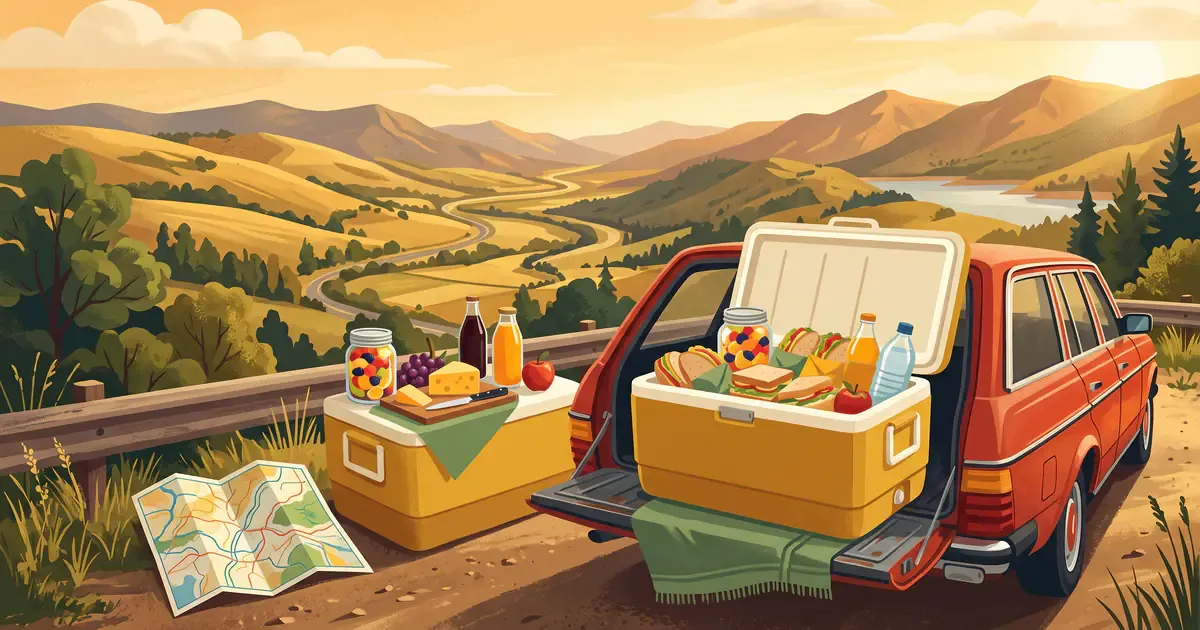
A long drive and a good meal are not natural allies. One wants momentum; the other wants a table, a little time, and somebody else doing the dishes. Most road trips settle the argument badly, with a bag of gas-station snacks at eleven, a drive-thru at two, and a vague feeling of having eaten nothing real all day.
The fix isn’t a spreadsheet of reservations. It’s a loose plan: a cooler packed right, a grocery run the night before, and a handful of towns you’d be happy to be hungry in.
Plan a Loose Food Route, Not a Rigid Itinerary
Rigid plans break. A place closes on Mondays, a bridge backs up, someone needs a bathroom at the exact moment you’d planned to be eating. Then you’re either eating badly or feeling guilty about skipping a table you never needed to book.
A loose food route works differently. Before you leave, mark the towns along your drive where eating would be a pleasure rather than a compromise: the county seat with an old main street, the college town, the stretch where the farms get smaller and the produce stands start. You’re not committing to any of them, just noting where the good hours are likely to fall.
Two anchors are enough: one for lunch, one for dinner, spaced so a late start doesn’t wreck the day. If you’re still working out where you’ll sleep, our city guides are a decent place to start, since a town with a real food culture usually has decent beds too.
Then read the road instead of the clock. If you’re hungry at eleven, eat at eleven. Waiting for the “right” town because you penciled it in is how people end up cranky and overfed at four in the afternoon.
Shop the Night Before
The night-before grocery run is the highest-return hour of a road trip. Go after dinner, when the store is quiet, and buy for the drive rather than for the week.
What to Buy
Buy food that can be eaten with one hand and doesn’t mind being squished. A rotisserie chicken helps if you have a cooler and a passenger willing to pull it apart. Add hard cheese, whole fruit, carrots and snap peas, a small tub of hummus, tortillas, a jar of pickles, plain yogurt, and a bag of ice. With a loaf of sturdy bread and a small jar of mustard, you can build a decent sandwich on a tailgate without buying anything else.
Skip the pre-cut fruit cups that sweat through their plastic and the prepared salads that will wilt by noon. Buy less than you think. The goal is to arrive with an appetite.
Snacks That Travel Well
- Roasted almonds or peanuts in a container with a lid
- Apples, oranges, and clementines, which come in their own packaging
- Pretzels or plain crackers
- Dried fruit, especially apricots and dates
- Hard cheese cut into sticks at home
- Jerky
- A couple of good chocolate bars, kept in the cooler if it’s hot
- Chewy granola bars, not the crumbly kind
The pattern is simple: nothing that melts into the upholstery, nothing that needs a fork, nothing that turns a car seat into a crumb repository.
Pack a Cooler That Actually Works
Most coolers fail for the same reason. Warm air gets in every time someone opens the lid. Pack it once, in layers, and open it as rarely as possible.
| Layer | What goes here | Why it works |
|---|---|---|
| Bottom | Frozen water bottles, ice packs, a bag of ice | Cold sinks, and the mass stays put against the walls |
| Middle | Meat, dairy, leftovers in sealed containers | The coldest zone, and it’s shielded from the lid |
| Top | Drinks, fruit, sandwiches, anything you’ll grab first | You grab it and close the lid before the cold air escapes |
| Outside or in a dry bag | Bread, crackers, bars, napkins, a knife | Stays dry and doesn’t get crushed |
Two habits make the difference. Chill everything before it goes in, because a warm container of soup will melt your ice by lunchtime. And keep a separate small bag for the things you reach for constantly, so the main cooler stays shut.
Leftovers, Ice, and Heat
Food safety on the road is mostly about time and temperature. Keep cold food cold, keep hot food hot, and don’t let anything sit in the danger zone for long. The standard guidance is two hours out of refrigeration, and one hour if the outside temperature is genuinely hot. A car parked in the sun counts as hot, even with the windows cracked.
The practical version: pack leftovers in shallow containers so they cool fast, drain the meltwater every time you stop, and don’t put yesterday’s rice back in the cooler at noon and hope. If you’re unsure, throw it out. A sandwich is cheaper than a day of misery in a motel room.
Empty and wipe the cooler each night, and refreeze what you can. It stops smelling like a science project by day three.
A Stop Is Not a Detour
This is the distinction that saves road trips. A stop is something you do on the way: fuel, bathrooms, coffee, a sandwich eaten standing up. A detour is something you do instead: a town you actually want to see, a market, a plate of food worth sitting down for.
The trouble comes when you call a detour a stop and then resent it, or when you treat every stop like a detour and spend the day herding everyone back into the car.
Decide which one you’re doing before you take the exit. If it’s a stop, park once, use the bathroom, buy the coffee, and get back on the road. If it’s a detour, give it real time, an hour or maybe two, and stop checking the clock. Half measures are the worst of both.
The Ten-Minute Test
When you’re choosing an exit and you don’t know the area, give yourself ten minutes from the off-ramp to a plate of food. If a place looks promising and it’s within a few blocks of the exit, take it. If it’s a fifteen-minute drive into a suburb and another fifteen back, you’ve turned a stop into a detour without deciding to.
A quick way to sort exits: skip the one with the most gas stations and chain signs, and try the next one along. Or leave the highway a town early and drive the old road through the middle of things. You’ll lose a few minutes and gain a main street.
Eating at Odd Hours and Drinking Without Constant Stops
Road hunger rarely arrives on schedule. You get stuck behind something slow, or you make good time and hit a city at three in the afternoon, hungry and nowhere near dinner.
Eating Off-Peak
Eat when you’re hungry and the town is convenient, not when the clock says so. A big lunch at noon means a light dinner, which means you can drive into the evening and stop wherever you land. A late breakfast means you can skip lunch entirely and eat early.
Carry a real meal’s worth of food in the cooler so a strange schedule doesn’t force a bad decision. If you’re eating at an odd hour, aim for something simple and warm, such as soup, a bowl of noodles, or a plate of eggs, rather than the heaviest thing on the menu.
Hydration Without the Constant Pull-Off
Drinking enough water and stopping every forty minutes are not the same problem, but they feel like it. The trick is to drink steadily rather than in floods. Sip, don’t chug. A bottle with a lid you can close sits within reach and gets used; a giant cup sweating in a holder does not.
Watch the caffeine and the salty snacks, which make you thirsty and then send you looking for a bathroom an hour later. When you do stop, drink a full glass of water alongside the coffee instead of treating the coffee as the drink.
The Drive-Thru Rule
Here’s the rule we use. Skip the drive-thru when you’re somewhere with a main street, and take it when you’re not.
That’s it. If there’s a town around you, whether it’s a courthouse square, a strip of shops, or a grocery store with a deli counter, get out of the car. Even a mediocre sandwich eaten at a picnic table beats a good one eaten in traffic. The whole point of driving somewhere is to be somewhere.
If you’re on a featureless stretch with nothing but a truck stop and a tall sign, the drive-thru is fine. Eat it, drink some water, and get back on the road.
A Better Kind of Road Food
Eating well on a long drive isn’t about finding the perfect restaurant. It’s about not being at the mercy of the next sign you see. A cooler packed the night before, a couple of towns you’d like to be hungry in, and the discipline to know a stop from a detour will do more for your trip than any list.
For more on where to eat and how to find it, browse the blog or dig into the city guides. And if your route runs through a town with a good food truck scene, our guide to finding the best food trucks is worth a read before you go.
Keep reading
Three more guides
 Late-Night Food: How to Find What's Open How to find good food after 10pm: check whether the kitchen is still serving, know which places hold up, order well at close, and get home safely.
 How to Read a Farmers Market Like a Chef A chef-style walk through a market morning: when to arrive, how to read a stall, what to ask growers, and how to build dinner from whatever looks best.
 Tipping at Food Trucks, Counters and Markets How tipping works at food trucks, counters and farmers markets: the jar, the card reader prompt, when it is customary, and how to keep it simple.