City Guides
Late-Night Food: How to Find What's Open
How to find good food after 10pm: check whether the kitchen is still serving, know which places hold up, order well at close, and get home safely.
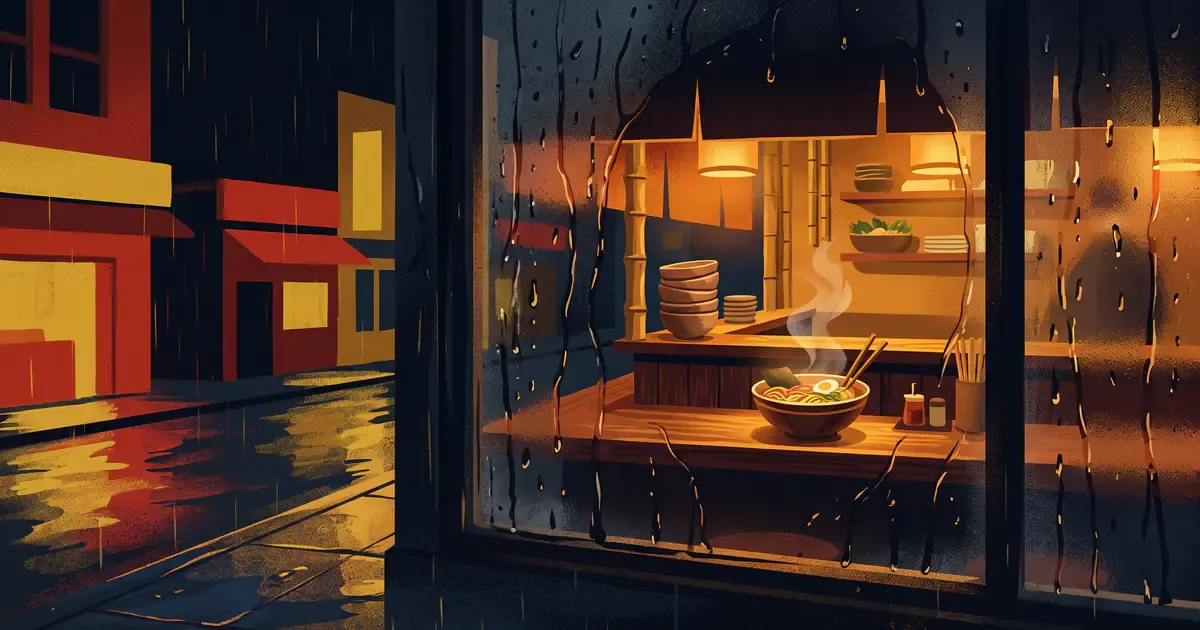
Ten at night is when a city stops being a list of restaurants and becomes a set of lights. The place you saved looks dark. The place that looks open is serving drinks and nothing else. You’re hungry, you’re tired, and the difference between a good night and a bad one is often one bowl of noodles.
Finding late food is a skill, and most of it is verification. Here’s how we do it: what to check, what to ask, where to go, and how to behave once you’re through the door.
The Door Is Open. The Kitchen Is Not.
The most common late-night mistake is trusting a sign that says “open until midnight” without asking what closes at midnight. Very often it’s the kitchen. The bar keeps pouring, the music keeps playing, and the fryer has been off since ten thirty.
Then there’s the quieter version: the door is unlocked, the lights are on, and a server tells you, kindly, that they stopped taking orders twenty minutes ago. Nobody is lying to you. The hours posted online describe the business, not the food.
So assume the kitchen closes earlier than the door. Assume it closes even earlier on a slow night, when there are three tables and a dishwasher who wants to go home.
Verify Before You Go
Before you put on shoes, do two things: check the hours in more than one place, and call.
Listings go stale. A place that changed hands in the spring may still show the old owner’s schedule. Look at the most recent information you can find, whether that’s the place’s own page, a recent photo of the door, or a mention in a local thread, and treat anything older than a season with suspicion.
The Call Before You Go
A phone call takes half a minute and settles everything. Keep it short and specific:
“Hi, are you still seating people tonight? And is the kitchen still taking orders, or just drinks?”
If yes: “Until what time are you taking orders?”
If it’s close to the hour: “Would we be a problem if we came in fifteen minutes? We’d order right away.”
That last question is the one most people skip, and it’s the one that matters. A kitchen still taking orders at 11:40 is a different thing from a kitchen wiping down at 11:40. Asking gives them room to say come now or try tomorrow, and either answer saves you a wasted trip.
If nobody answers, don’t take that as closed. A small place with one person cooking may not pick up. But don’t drive across town on a guess either.
Where Late-Night Food Actually Holds Up
Some kinds of places handle late hours better than others, because their food is fast, their menu is short, and the kitchen doesn’t need to be at full strength to do it well.
Noodle Shops and Taquerias
These are the two most reliable categories almost anywhere. A noodle shop with a bubbling pot can serve a bowl in minutes, and the broth has usually been improving all day. A taqueria with a hot griddle and a stack of tortillas can feed a line of people without the kitchen falling apart.
Both tend to keep hours that reflect their neighborhood rather than a schedule handed down from an office, which means they’re often open when the surrounding streets are still busy, and closed when they’re not.
Diners and All-Day Breakfast
The old-fashioned diner is built for this. Eggs, toast, a griddle, coffee that has been on since morning, and a menu where breakfast is available at any hour. It’s also one of the few places where sitting alone at eleven at night is completely normal.
Look for the ones with a counter. A counter means you can eat without taking a table for two, and it usually means faster service.
Pizza by the Slice
Slice counters are ideal late food because the food is already made. You’re not asking a kitchen to start something, you’re asking someone to reheat a slice. That’s a much smaller favor, which is why slice shops can stay open later than a full restaurant with the same number of staff.
The 24-Hour Grocery
Not dinner, but a solution. A big grocery store that never closes will have a deli counter that is probably shut and a hot bar that is probably tired, plus a shelf of things that will get you to morning: bread, cheese, fruit, yogurt, and a rotisserie chicken if you’re lucky and it’s early enough. It’s also the rare late-night stop where you can buy water, bandages, and a decent apple at the same time.
Late-Night Options by Mood
| The mood | What tends to work | What to expect |
|---|---|---|
| You want a real meal and a seat | A diner, or a noodle shop with tables | Slower service, a shorter menu, and a room that’s winding down |
| You want to eat in the car | A taqueria or a slice counter | Fast, wrapped to go, easy to eat one-handed |
| You want something warm and quick | A noodle counter or a soup place | A short wait, a big bowl, no ceremony |
| You want to graze, not commit | A 24-hour grocery | Good for bread, cheese, fruit, and anything you forgot to pack |
| You want to sit and talk | A diner with a counter or a late cafe | Coffee, pie, and nobody rushing you out |
The mood matters more than the cuisine. A great restaurant at eleven, when all you want is to be asleep, is worse than a plain bowl of soup when you want to be awake.
Neighborhoods Change After Dark
The same block that’s pleasant at lunch can feel entirely different at midnight. That’s not a reason to stay home. It’s a reason to pay attention.
Late food clusters where people already are: near transit stops, around hospitals and universities, on streets with a bar scene, and in neighborhoods where shifts end late. Those are also the places where a kitchen stays open, because there’s demand for it. A quiet residential block with one lit restaurant is usually quiet for a reason.
Getting There and Back
Plan the return trip before you leave. Know how you’re getting home, and if it’s late and you’ve been drinking, don’t drive. Transit thins out after a certain hour, so check the last train or bus rather than assuming one will come.
Walk on lit streets, keep your phone in your pocket instead of in front of your face, and park somewhere you’d be comfortable walking back to. If a place feels wrong when you arrive, whether it’s an empty room, a dark block, or a door you have to be buzzed through, trust that and go somewhere else. There’s always another option, and no meal is worth a bad feeling.
If you’re new to a city, our city guides are a reasonable place to start, and browsing the blog will usually turn up something near where you’re staying.
Ordering When the Kitchen Is Winding Down
By the time you sit down, the kitchen may be in cleanup mode. Order accordingly and everybody has a better night.
Ask what’s fast and what’s already made. A pot of soup, a plate of noodles, anything braised, anything that fries in under a minute: these are kind to a kitchen at the end of service. A long tasting menu, a well-done steak, or anything that requires the grill to be fired back up is not.
Don’t ask for substitutions. Don’t send something back unless it’s genuinely wrong. Don’t order the last of something and then change your mind. And if the server tells you the kitchen closes in ten minutes, believe them and order within the first two minutes.
Tipping and Acting Right at Close
Tip as though the person serving you has been on their feet for eight hours, because they probably have. A generous tip at close isn’t charity, it’s the price of being the table that made the last hour pleasant instead of endless.
Order everything at once, including the coffee and the check if you can. Don’t linger for an hour after the plates are cleared if the room is empty and the chairs are going up. Read the room: a busy diner at midnight is a place to sit, and a silent one with the mop out is a place to finish up.
If you’re a party of six walking in at 11:50, be honest with yourself about whether you’re the reason someone stays an extra hour. Sometimes that’s fine, and you tip accordingly. Sometimes it’s better to get it to go.
Worth the Walk
Late-night food rewards a little preparation: a phone call, a look at the hours, a sense of which blocks are alive and which aren’t. Do that much and you’ll eat well at an hour when most of the city has already gone to bed.
For more on eating your way through unfamiliar places, start with cities or our notes on tipping at street food stands, which apply just as well at midnight.
Keep reading
Three more guides
 Eating Well on a Road Trip: A Practical Guide How to eat well on a long drive: plan a loose food route, pack a cooler that works, shop the night before, and find good exits without losing an hour.
 How to Read a Farmers Market Like a Chef A chef-style walk through a market morning: when to arrive, how to read a stall, what to ask growers, and how to build dinner from whatever looks best.
 Tipping at Food Trucks, Counters and Markets How tipping works at food trucks, counters and farmers markets: the jar, the card reader prompt, when it is customary, and how to keep it simple.