Food Trucks
How to Find the Best Food Trucks in Any City
A practical field guide to finding the best food trucks in any city: what to look for before you order, where trucks really park, and a ten-minute routine.
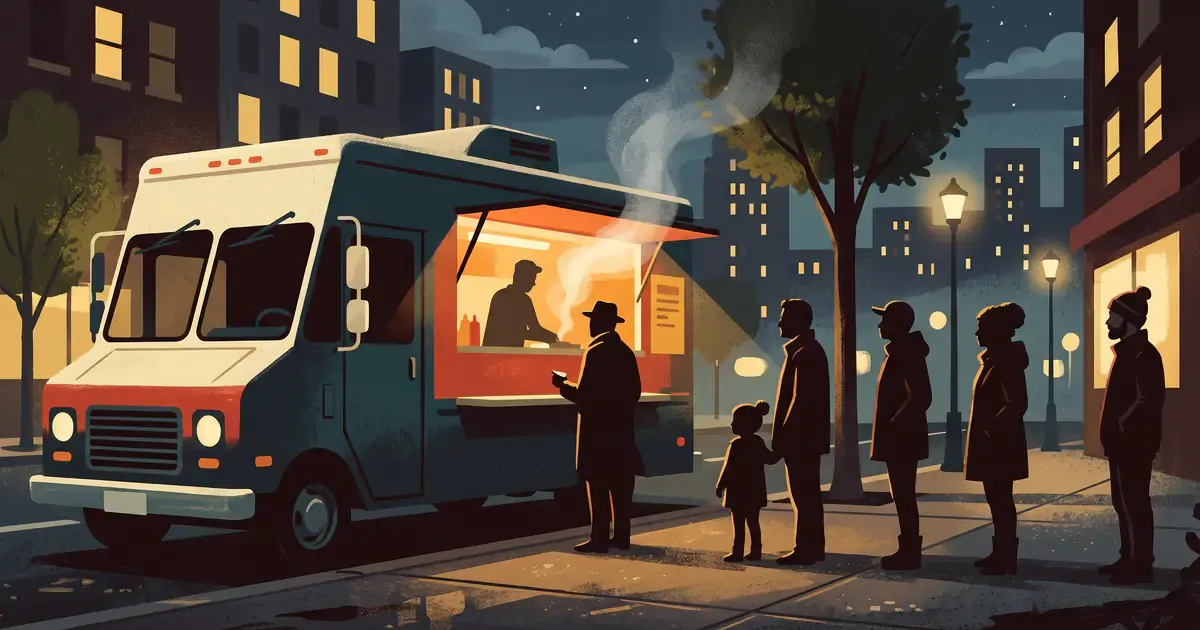
Every city has a handful of food trucks worth rearranging an afternoon for, and a longer list that will hand you a lukewarm plate and a shrug. The difference is rarely a secret. Trucks show how they cook before you taste anything: what is on the board, how the window is run, who is standing in line, and where the truck parked today.
You do not need local knowledge to read any of it. You need a few habits, a phone check before you leave, and the willingness to walk away from a bad line. Here is the field guide we keep coming back to.
Quality Signals You Can Read From the Sidewalk
Start before the menu. A truck is a small kitchen with nowhere to hide, which is good news for anyone deciding where to eat.
Look at the board
A short menu is usually a confident one. The kitchen bought for those dishes, prepped for those dishes, and can cook them while somebody else asks about allergies. A board with dozens of items across several cuisines is built for indecision, not lunch. Watch for signs of a kitchen thinking on its feet: a handwritten special, tape over a sold-out item, a note about what came in this morning. Those changes cost effort, and effort is what you are buying.
Look at the window
The window is the truck’s front porch. Is the counter wiped? Are gloves changed? Is there a rhythm between the person taking orders and the person cooking? None of it guarantees good food, but a messy window attached to a chaotic line is a fair warning. Then use your nose. Fat hitting a hot flattop and something green being chopped means food is made to order. A flat smell and trays already full under a lamp mean a reheat operation.
Look at the line
A line is information, just not the kind most people think. Length tells you how popular a truck is. Movement tells you how well it is run. One that shuffles forward every couple of minutes, with people walking away holding paper trays, is a kitchen with a system. A crowd standing in the same spot with empty hands is a kitchen in the weeds, and no reputation will save your lunch.
| What you see | What it usually means | What to do |
|---|---|---|
| A handful of dishes, one handwritten special | The kitchen is set up to do those well | Order the special |
| A menu spanning several unrelated cuisines | Broad appeal, thin prep | Ask what sells most, then order that |
| A line that keeps moving | A crew with a system | Stay in it |
| A crowd waiting with no food in hand | The kitchen is behind | Give it a few minutes, then walk |
| Three trucks parked within sight of each other | Competition for the same lunch crowd | Compare boards, join the busiest |
| Staff greeting people by name | Regulars, which usually means consistency | Order whatever the regulars order |
Where Trucks Actually Park
Trucks move, sometimes twice a day. Any list of addresses is stale the moment it is printed, so the useful skill is knowing where to look.
Follow the feed, not the map
Most trucks post their location the morning they open. Check the truck’s own feed and the local street food chatter before you leave. The important thing on that page is not the food photo. It is the date. A truck that last posted weeks ago may be on vacation or may have stopped altogether. Map listings help with discovery and hurt with accuracy: treat a pin as a hint that a truck exists in this part of town, not a promise it will be there at noon.
Learn the parking patterns
Every city has its own geography of lunch. Office parks and business districts fill with trucks at midday and empty out by early afternoon. Brewery lots borrow trucks in the evening, because the brewery has seats and the truck has dinner. Markets, campuses, hospital grounds and construction sites all draw trucks on a schedule you can learn in a week. Commissary kitchens, where trucks prep and park overnight, are not destinations, but trucks cluster nearby, and a row of them at the right hour is its own small food court.
A truck that has held the same corner for years is a local institution. One that rotates between three neighborhoods is telling you which days to find it.
If you would rather start from a map than a hunch, browse our city guides for places we have already walked.
Order Like You Have Been There Before
The best thing you can say at a window is some version of “what are you known for?” Staff would rather steer you to the dish they are proud of than watch you order the one item they rush. Ask what is selling. If the answer comes fast, take it.
Order the thing the truck is named for. A place that calls itself a taco truck and also sells wings is telling you where its attention goes. Keep customizations light during a rush: rewriting a dish while the line backs up slows the whole window, and what you get is the food that was made fastest, not best. If you have a real allergy, say it plainly before you order and ask what they can do.
Timing: Lunch Rush, Late Shift, and Weather
Lunch is a sprint
The lunch window is short and unforgiving. Arrive a little before or after the rush and you get the same food with half the wait, plus a cook with time to answer a question. Arrive in the middle and you get the real thing: a crowd, a line, and a kitchen at full speed.
The late shift is a different sport
After dark, trucks run smaller menus, longer waits, and a crowd in no hurry. Some go cash only. Some park where the foot traffic is, not where the map says. If you are eating late, our guide to late-night food is worth a read before you commit to a walk.
Weather changes the calculation
Rain thins a lunch crowd to nothing, which means a truck that opens in the rain either has a following or needs the sales badly. Ask which. Heat pushes people indoors and slows a line. Cold makes a hot flattop smell like the best idea in the city. Wind is the one to watch: a truck with an awning and a windbreak has thought about your comfort, and that usually extends to the food.
Lines, Payment, and Being a Good Customer
A line at a truck is a small social contract. Stand where you can see the window, have your order ready, and do not claim a table for people who have not arrived. If the truck has a few picnic tables, eat and move on so the next group can sit.
Ordering for a group? Write it down before you reach the window. A crew can cook fast, but they cannot guess who wanted no onions.
Ask about payment before you order if you are unsure. Many trucks take cards, some still prefer cash, and a few are cash only late. Nobody minds the question. Everybody minds finding out halfway through service that the card reader is down.
Tip if you can and skip it if you cannot, without making a show of either. The person at the window is often the owner, and they have heard every speech about tipping culture already. A plain “that was great” carries more weight than you would think.
A Ten-Minute Routine for a City You Have Never Visited
This is the part worth saving. It works in a town you know and a town you do not.
- Search a map app for food trucks and look for clusters, not single pins. Two or three trucks within a few blocks is a destination.
- Check local coverage for the current week. Our food truck section is one place to see how it is done.
- Open the feed of the truck that looks best and scroll to the newest post. Older than a week, assume it has moved on.
- Pick a cluster and a time, not just a truck: lunch in a business district, dinner near a brewery, weekend at a market.
- Arrive before or after the rush if your schedule allows it.
- Walk the row before you join a line. Read every board, and note which truck has the shortest menu and the most confident handwriting.
- Ask one question at the window: what is selling today?
- Order one thing, eat it there, and notice whether the second bite is better than the first.
- Follow the truck that impressed you, so the next visit is a return trip instead of a search.
- If something was good, say so out loud before you leave.
The Only Rule That Matters
Good trucks are busy with people who already know them, and that is the whole trick. Find the cluster, read the board, watch the window, and follow the crowd that keeps coming back. If you want more of this, the blog is where we keep the rest.
Keep reading
Three more guides
 Tipping at Food Trucks, Counters and Markets How tipping works at food trucks, counters and farmers markets: the jar, the card reader prompt, when it is customary, and how to keep it simple.
 Late-Night Food: How to Find What's Open How to find good food after 10pm: check whether the kitchen is still serving, know which places hold up, order well at close, and get home safely.
 How to Read a Farmers Market Like a Chef A chef-style walk through a market morning: when to arrive, how to read a stall, what to ask growers, and how to build dinner from whatever looks best.