Seasonal Eats
What's in Season Each Month in the US
A practical month-by-month guide to what is in season across the US, with notes on regional timing, fading crops, and the best-value picks each month.
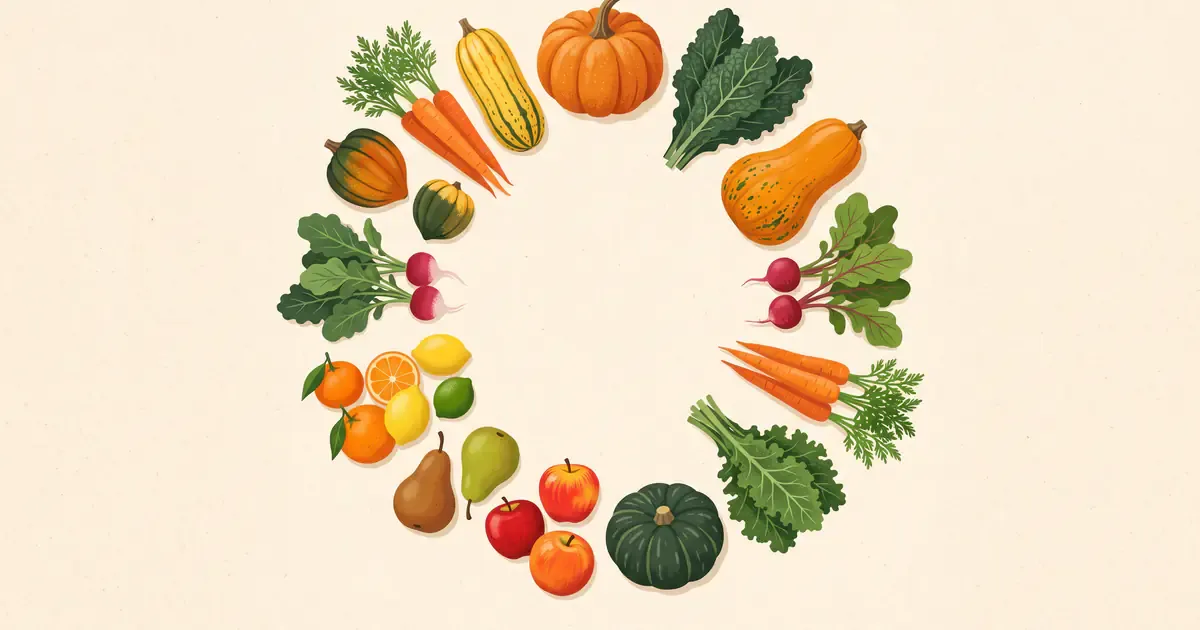
A tomato in January is not really a tomato. It is a shipping decision: picked hard, cooled down, and trucked a long way so it can sit in a store looking like the idea of a tomato. That’s not a reason to give up on winter cooking. It’s a reason to eat something else.
This guide is a rough map of what is good when in the United States, organized by season and then by month. Treat it as a starting point rather than a rule. A market in coastal California, a farm in Georgia, and a box from a farm share in Minnesota do not share a calendar, and knowing that is the first useful thing about seasonal eating.
Why “in season” is a range, not a date
A season is a window, not a day. It opens earlier in the South and later in the North, earlier in valleys and later on mountainsides, earlier near an ocean that holds heat and later on the high plains. A warm March can move everything up by two or three weeks. A cold, wet May can hold asparagus back until June. Strawberries might show up in February in parts of California and Florida and in June in the upper Midwest. Same fruit, different month, both correct.
It helps to keep two words separate. Available means you can buy it. At its peak means it is worth planning a meal around. A greenhouse tomato in March is available. A tomato in August is at its peak, and the difference isn’t subtle.
Storage crops blur the edges further. An apple in February was probably picked in October. A winter squash in January might have been curing in a barn since September. Local and in season are related ideas, but they’re not the same idea, and that’s fine. Cellaring is an old skill, and it counts.
Here’s the rough shape of a year in a temperate part of the country. If you live somewhere hot, high, or unusually wet, slide everything a few weeks in whichever direction your weather tends to go.
| Month | At its best | Fading | Good value |
|---|---|---|---|
| January | Citrus, winter squash, storage apples | Pomegranates, persimmons | Cabbage, carrots, onions |
| February | Citrus, leeks, Brussels sprouts | Winter squash, apples | Beets, parsnips, cabbage |
| March | Asparagus in the South, radishes, greens | Citrus, storage apples | Leeks, cabbage, potatoes |
| April | Asparagus, peas, rhubarb, spinach | Citrus, storage roots | Radishes, scallions, greens |
| May | Strawberries, peas, asparagus, herbs | Rhubarb, storage apples | Lettuce, spinach, radishes |
| June | Strawberries, cherries, zucchini | Asparagus, rhubarb, peas | Zucchini, greens, broccoli |
| July | Tomatoes, corn, peaches, berries | Cherries, peas, lettuce | Zucchini, cucumbers, green beans |
| August | Tomatoes, corn, melons, peppers | Berries, stone fruit | Tomatoes, zucchini, corn |
| September | Apples, pears, squash, tomatoes | Corn, melons, stone fruit | Tomatoes, peppers, apples |
| October | Apples, squash, sweet potatoes | Tomatoes, peppers, berries | Apples, cabbage, potatoes |
| November | Apples, roots, Brussels sprouts | Tomatoes, tender greens | Roots, cabbage, onions |
| December | Citrus, winter squash, storage pears | Cranberries, late apples | Citrus, cabbage, carrots |
Winter: citrus, roots, and greens that survive
December through February is the season people assume is empty, and it’s the one that rewards a little knowledge the most.
Citrus is the headline. Oranges, mandarins, grapefruit, and lemons from California, Arizona, Texas, and Florida are at their best in the coldest months. If you live in one of those states, this is the stretch when the local fruit is also the best fruit. If you don’t, citrus is still the safest bet in the store, because it is genuinely in season somewhere in the country. Use it while it lasts, because by April it is a different piece of fruit.
Behind the citrus is the storage table: apples, pears, winter squash, potatoes, onions, carrots, beets, cabbage, and sweet potatoes. Kale, collards, chard, and spinach keep growing through mild winters. Turnips, parsnips, rutabaga, and Brussels sprouts are sweeter after a frost, because cold pushes the plant to turn starch into sugar. That’s not folklore. It’s the plant protecting itself, and it works in your favor.
How to cook it
Roast at high heat and finish with acid. Braise the sturdy greens with something smoky. Put citrus segments over roasted squash, zest into a dressing, and juice over shredded cabbage. Winter food tends to be rich, and acid is what keeps rich from turning heavy.
Spring: the season that keeps changing its mind
Spring arrives in pieces. Asparagus usually leads, then peas, radishes, rhubarb, spinach, lettuces, scallions, and green garlic. Strawberries arrive late in spring for most of the country, earlier in the South and along the coasts. Artichokes and fava beans show up in milder places.
Two things are worth knowing. Thin asparagus is not better than thick asparagus; spear size mostly reflects the age of the plant, and thick spears are often sweeter and more tender. And rhubarb is a vegetable stalk that we treat like fruit, which is why it needs sugar and why it pairs so well with strawberries.
The hungry gap
Late winter into early spring is the hardest stretch of the year. The storage crops are running out or going soft, the new greens are still weeks away, and the market looks thin. This is when frozen produce, preserves, and greenhouse greens earn their place instead of feeling like a compromise. You can find the recipes that work in those thin weeks in our seasonal eats archive.
Summer: the easy season
Summer doesn’t need much advice. Tomatoes, corn, peaches, berries, melons, cucumbers, zucchini, peppers, eggplant, and green beans arrive in a wave, with cherries at the front and plums and apricots in the middle.
Two rules are worth following. Corn starts converting its sugar to starch the moment it is picked, so cook it the day you buy it if you can. Tomatoes lose their texture in the refrigerator, so leave them on the counter and eat them at room temperature.
When there is too much
Zucchini and green beans don’t arrive in reasonable quantities. They arrive in a flood, all at once, and then they are gone. Pickle what you cannot eat, freeze what you cannot pickle, and hand the rest to a neighbor. A Sunday afternoon spent making tomato sauce is not a chore. It is the reason January is bearable.
Fall: the reward for waiting
September through November is the most generous stretch of the year in much of the country. Apples and pears lead, squash and sweet potatoes follow, and the brassicas get better with every cold night. Leeks, parsnips, cranberries, grapes, figs, persimmons, pomegranates, and quince fill in around them. In many places tomatoes and peppers hang on until the first hard frost, which makes September and early October some of the best eating of the year.
Frost is an ingredient here too. Brussels sprouts, kale, and parsnips all improve after a cold night. If you see a grower selling sprouts still on the stalk, buy them. They keep longer that way, and they look good on the counter until you get around to cooking.
Your fall is not everyone’s fall
Where you live decides what the season means. In much of the country, fall is peak tomatoes and peppers. In parts of California and the Southwest, it is the start of citrus and the end of a long, hot summer. Both are fall. Neither one is wrong.
The off months, and seasons you did not grow up with
What frozen produce is actually for
Frozen produce is picked at its peak and frozen fast, so flavor and nutrition hold up well. Texture is the tradeoff. That makes frozen the wrong choice for a salad and the right choice for soup, stew, sauce, curry, crumble, and smoothies. Buy the plain versions without sauces or seasonings, and keep peas and corn on hand all winter. They are good enough to eat on their own with butter and salt.
Storage crops deserve a second look
Apples, squash, onions, potatoes, cabbage, carrots, and beets will carry you through months if you store them well: cool, dark, dry, and ventilated. Keep apples away from greens, because apples give off a gas that speeds up spoilage. Cabbage is the most underrated of the group. Slaw, braise, roasted wedges, and sauerkraut all come from the same cheap head.
Shopping a season that is not yours
If you grew up somewhere warm and now live somewhere with a real winter, or you grew up with a supermarket that had everything all year, a seasonal market can feel like a list of things you cannot have. Try flipping it. The market is not restricting you; it is telling you what is good this week. Ask the people selling it what they would cook. Pick three anchor crops per season and learn them well instead of trying to learn everything at once. Our city guides can point you toward markets and farm stands near you, and if you want to get better at those conversations, read how to read a farmers market like a chef.
Start with this month
You don’t need the whole calendar in your head. Find this month in the table, buy three things that are at their best, and cook them simply. That’s the entire practice. The rest of the year will take care of itself, and if you want more guides like this one, browse the blog.
Keep reading
Three more guides
 Late-Night Food: How to Find What's Open How to find good food after 10pm: check whether the kitchen is still serving, know which places hold up, order well at close, and get home safely.
 How to Read a Farmers Market Like a Chef A chef-style walk through a market morning: when to arrive, how to read a stall, what to ask growers, and how to build dinner from whatever looks best.
 Tipping at Food Trucks, Counters and Markets How tipping works at food trucks, counters and farmers markets: the jar, the card reader prompt, when it is customary, and how to keep it simple.